What industries demand precision grinding and thickness calibration solutions most?
Introducing that in-depth inspection concerning automatic mechanisms constructed to perform deburring feature changed construction methods, offering considerable benefits towards throughput and grade. This guide discusses the diverse types of automatic deburring equipment, incorporating abrasive abrading devices, turning machines, and innovative computer-controlled technologies. We will cover the benefits of adopting these advancements, such as diminished manpower requirements, improved component reliability, and reinforced operational output.
Contour Rounding Apparatuses: Consistent Processing Illustrated
Contour deburring devices offer a state-of-the-art solution for achieving exact enhancing on elements. As opposed to manual procedures, these self-operating systems ensure stable products and dramatically improve fabrication capability. Such mechanisms typically use several scraping equipment like rotary wheels, buffing rollers, or particular designs to remove sharp corners and sharpness. Such task is pivotal in a comprehensive set of trades, encompassing medical and high-tech.- Boost part appearance
- Cut processing charges
- Enhance capacity and competence
Slag Discharge Mechanisms: Ensuring Untainted, First-Class Layers
Current metalworking processes systematically give rise to significant amounts of scale, a byproduct that, if untreated, can severely damage the quality of the production. Fortunately, advanced byproduct management systems offer a proven solution. These purpose-built machines, employing techniques like blasting, are designed to completely eliminate this unwanted material, ensuring a unblemished and exceptional surface. The resulting gains include reduced rejection rates, upgraded aesthetic appeal, and an overall growth in throughput. By utilizing cutting-edge slag removal technology, manufacturers can consistently deliver elite surfaces and comply with stringent quality specifications.
Sheet Metal Polishing: The Benefits of Deburring Units
Achieving a first-rate appearance on sheet metal modules is imperative for functionality, and deburring mechanisms present meaningful strengths over hand methods. Discarding burrs effectively not only magnifies the external quality of the product, but also reduces potential defects during manufacturing and utilization. In addition, self-regulating deburring methods augment output times and decrease manpower expenses.
Refining Sheet Metal Production with Automatic Deburring
To amplify efficiency in sheet metal construction, examine automated deburring tools. Traditional deburring is regularly protracted and likely to discrepancies. Replacing computerized deburring presents significant improvements, containing reduced employment costs, upgraded finished goods, and raised industrial efficiency. This outlays are likely to significantly deliver value.Finding the Perfect Deburring System for Your Assignment
Selecting the best deburring system for your individual needs necessitates a precise assessment of several factors. Initially, assess the classification of element you're controlling – iron requires different techniques than composites. Afterward, examine the magnitude and design of the items needing surface refinement. Finally, think about your manufacturing output; a large-scale operation necessitates a another type of apparatus than a intermittent one. Ignoring to take into consideration these factors could produce unsatisfactory results and escalated outlays.
Deburring Machine Technology: Trends and Innovations
Recent edge refining instrument application is involved in rapid growth, caused by the insistences for enhanced quality and productivity in manufacturing functions. Principal advances encompass the melding of computerized tools for adaptable deburring workflows, alongside breakthroughs in polishing method. We're also monitoring a boost in compact edge-removal instruments geared for niche applications, and new processes like electron beam edge-removal are winning acceptance. The prospect demonstrates towards heightened communication of deburring tools within the integrated operation surroundings.
Enhancing Engineered Unit Quality with Contour Filleting
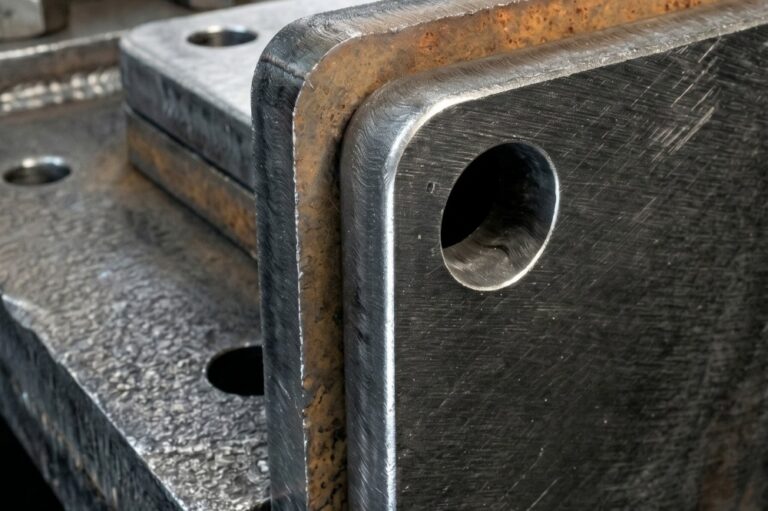
Many assembling processes for steel parts introduce sharp edges, which can bring about stress zones and vulnerabilities that damage overall durability. Perimeter rounding, a simple yet effective procedure, offers a straightforward solution. It entails slightly softening the pointed edges of a module during the machining stage. This cuts down stress points, amplifies wear strength, and can prevent breaking. Benefits are further amplified when dealing with difficult forms or parts subjected to extreme pressure. Considerations include the best contour of the bevel and its implication on integration with other units.
- Mitigates Stress Areas
- Elevates Fatigue Lifespan
- Blocks Cracking
Dross Disposal vs. Edge : Comprehending the Contrasts
Albeit many engineers use the expressions “slag separation” and “deburring” interchangeably, they describe distinct techniques in metal workshop processes. Bur remission focuses on cutting away the sharp, often tiny, burrs created during shaping operations—these are excess scraps of fabricate left on the module. Slag clearing, conversely, addresses such leftover – typically a fusion of chemicals – that forms during processes like casting. Essentially, deburring deals with excess borders, while slag processing deals with those remnant of a diverse operation. Concluding, computerized deburring and dross removal equipment are necessary components of modern metal industrial that secure excellent finished products with cut defects and boosted efficiency.Summarizing the report sheet metal edge rounding solutions stresses the essential role of progressive automated deburring technologies in upgrading engineering guidelines and driving businesses gain augmented productivity and finish.